Struggle Isn’t Failure
Let me just start by saying something obvious: we don’t like to struggle and we avoid it whenever we can. We don’t like the feeling of not knowing if we will make it to the other side of whatever this unpleasant part is, or that we might not have what it takes to conquer it. We don’t like the blisters or the muscle aches or the tired feet. And if we have to struggle in front of others, forget it! We hate the vulnerability and the comparison, that someone else might see our weakness, be laughing at us, or be more capable than we feel at that moment. No, thank you. Humans like comfort, we like ‘content’, and ‘happy’ and ‘healthy’ and ‘confident’. And with all the comforts we have in America in this day and age, it is a very small percentage of our day where we have to struggle or sit in discomfort, especially compared to the rest of history.
If we took a group of people from a place or time where they are used to grueling physical work to survive, making everything they eat from scratch, and/or fixing anything and everything that breaks by themselves, there would be some stark contrast in mindsets from those people to where the majority of us are today. People who are used to grueling physical work don’t think twice if they need to dig a ditch or replace a roof. People doing chores from sun up to sun down don’t have a problem adding one more thing to their list. But people who sit staring at a screen all day for work don’t typically jump at the chance to do hard physical labor. Someone who has never swung a hammer (is swung a word?) is way less likely to go to Home Depot and buy the supplies to build a deck. Similarly, someone who stops working hard for a while is more likely not to return to it. Olympic athletes who have taken a few years off of their sport are celebrated as heroes when they make a comeback. And they should be, the mental fortitude and stamina it takes, as well as physical discipline, are outstanding. Why? Because a lack of discomfort or challenges for even a short time makes us way more likely to continue following the path of least resistance.
The main principle at play here is the more we avoid discomfort, the more we convince ourselves we aren’t capable of handling it. Read that again, please. What we repeat in thoughts or behavior, we reinforce. I tell myself “I’d rather not” or “I don’t know how it will turn out”, but eventually that can turn into “It’s gonna be horrible” or “I can’t.” In sessions, I can’t tell you how many times I’ve had clients say they wish they could tell a loved one how they really feel, and when I ask if they have tried, they respond, “oh, I could never say that!” So I challenge them on why it feels too difficult. Often the realization is that they have been putting it off for months or even years, and now they are convinced it would be too hard. And this principle applies to emotional or physical discomfort. The more we sit in the AC on our cushy couch or only have polite, surface-level conversations with our friends or coworkers, the less capable we feel to sit in the 100-degree heat or to have emotional conversations or resolve conflict. And the less we allow ourselves to be challenged or uncomfortable, the less confidence we have in our ability to withstand a challenge. What we avoid reinforces our belief.
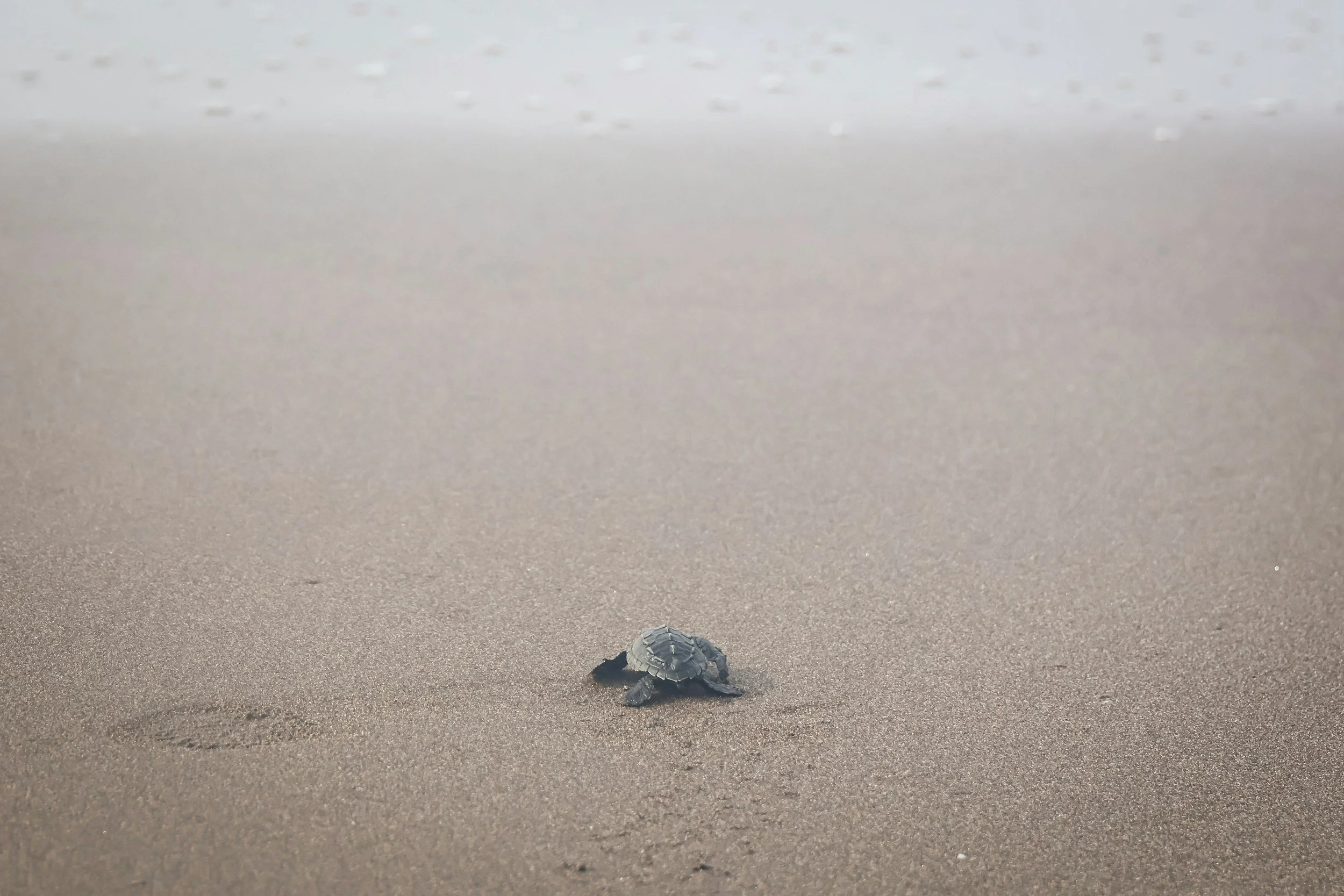
When we avoid discomfort, we reinforce the idea that we can’t handle it.
However, the good news is our brains always have a silver lining built in, that our default settings or trained perspective can change depending on what we repeat or rehearse most. Neuroplasticity. Instead of being stuck in a mindset of “I can’t do that hard thing”, we can change our default to “I can try to do hard things” or even “I can master the thing I couldn’t do before, if I keep working on it”. So what we practice also reinforces our belief. Here’s an example: I have told myself I’m bad at Math for my entire adult life, mostly because some pathetic memories of high school Math classes play on repeat in my head when I think about that subject. The times I was called on and didn’t have a clue what the answer was. My face was beet red and my hands were sweating. I just wanted to crawl under my desk and disappear. But what would happen if I injected a new message into those memories when they come up? What if I changed my internal message to “I can be good at Math if I work at it”, do you think it would change my actions? Not right away, it would take some time and repetition, but soon I would BELIEVE that I can apply myself, and I’d BECOME more likely to try. Again, it would take some time, but removing the limiting belief or identity thought would allow me to grow in a way I didn’t used to think was possible.
This change in perspective is often referred to as a “Growth Mindset”, that hard things I go through or challenges I face are something that make me stronger and more capable, not something that stops me. You’ve heard the phrases, “I can do hard things” or “no pain no gain”, or “what doesn’t kill you makes you stronger”. I hear them more often as a joke or in sarcasm, but they are still true. Whatever you are struggling through makes you stronger. What makes you feel weak is actually growing your mental & emotional muscles. We love the comeback, the hero origin story. Why? Because it tells us we can also overcome pain and become something greater. It gives us hope!
Struggle isn’t failure. It is a sign of growth, of progress, and really proof of life. Wesley said it in The Princess Bride, “Life IS pain, Highness!”. But thankfully the pain also leads to so much more beauty and hope and growth, if you can just sit in it a minute. Don’t stop because you are struggling. Struggle through. You’re probably closer to a breakthrough than you know. A pastor told me once, “God wants us in the struggle because that’s the whole point, that He, that truth, that life is worth struggling for. The answers don’t always matter as much as the struggle.”
Isn’t that beautiful? The struggle is where we find what matters in life. The answers will come. Do the hard thing. Get the blisters. Feel the feelings. Cry the tears of grief or frustration. And remind yourself that you can handle it and it will get better. Struggle isn’t failure, it’s strength under stress. And it will produce something beautiful if you let it.
Take care,
Angie